Mental Health Singapore: A Complete Guide to Finding the Right Support

24 min read

A struggle with mental health rarely arrives with a clear label attached. It tends to show up as persistent tiredness, a short temper, a marriage that feels distant, or a sense that something is simply off. Working out what kind of help fits that experience, and where to find it in Singapore, can feel like its own separate task on top of everything else a person is already carrying.
This guide brings together the practical information needed to navigate mental health support in Singapore: the different professionals involved, the signs that point towards seeking help, what a first session generally involves, how to choose someone suited to your needs, and what counselling and related care cost, including the subsidies available through public schemes.
The State of Mental Health in Singapore
Struggles with mental health are Singapore are far more common than the silence around them suggests. National data from the second Singapore Mental Health Study found that mood, anxiety, and alcohol use disorders affect a substantial share of the resident population over a lifetime (Subramaniam et al., 2020). Despite this, the same research programme has repeatedly found a wide treatment gap: most people who meet the criteria for a mental disorder in any given year do not seek professional help for it (Subramaniam et al., 2020).
Several things sit behind that gap. Some people are unsure whether what they are experiencing counts as serious enough to warrant therapy. Others worry about being seen as weak, or about family members finding out. Many simply do not know where to start, given the range of titles, the cost of private care, and the assumption that public services involve long waits. Singapore-based research on help-seeking has found that people are more likely to approach a mental health professional once symptoms meet the threshold for a clinical disorder, and considerably less likely to seek help for distress that falls short of that threshold, even when that distress is affecting daily life (Shafie et al., 2021). In practice, this means many people wait until things feel unmanageable before reaching out, when earlier support would often have been more straightforward and less costly.
Understanding who provides mental health support in Singapore, what is realistic to expect from counselling, and what it costs removes much of that uncertainty and makes the first step easier to take.
Common Myths and Misconceptions
A good deal of the hesitation around counselling in Singapore comes not from a considered decision against it, but from beliefs about it that do not hold up once examined.
Counselling is only for severe problems. This is one of the most persistent misconceptions, and it is largely responsible for people waiting until a difficulty becomes unmanageable before reaching out. National data shows that mood, anxiety, and alcohol use disorders affect a substantial share of the population over a lifetime, and a large proportion of those who meet the criteria for a disorder in any given year never seek professional help at all (Subramaniam et al., 2020). Counselling is equally suited to ongoing stress, relationship strain, or simply a general sense of feeling unsettled, long before any of that reaches a clinical threshold.
Seeing a counsellor means something is wrong with you. This belief treats counselling as a response to personal failure rather than as a form of structured support, in the same category as seeing a physiotherapist for a strained muscle. Singapore-based research on help-seeking has found that people are considerably more willing to approach a professional once symptoms become severe, and considerably less willing to do so for everyday distress, even when that distress is already affecting daily life (Shafie et al., 2021). We have written more on why asking for help is a strength, not a weakness, and reading what other clients have said on our testimonials page can also help put this myth into perspective.
Talking to family or friends is enough; professional help is unnecessary. Informal support has real value, and many people turn to it first. However, qualitative research on young adults with depression in Singapore found that this preference carries genuine risks: participants frequently described having their symptoms dismissed, being given well-meaning but unhelpful advice, or facing outright opposition when they tried to seek formal help, all of which delayed treatment further (Samari et al., 2022). If you are the friend or family member in that position rather than the one struggling, our section on supporting someone else further in this guide covers what tends to help and what tends to backfire.
Needing therapy is a sign of weakness or poor character. This belief shows up repeatedly in local research as a barrier to help-seeking, often expressed as the idea that someone with depression is lazy, unmotivated, or simply not trying hard enough (Samari et al., 2022). We have written separately on understanding depression as a biological signal, not a personal failure, which goes into this in more depth.
Once you start counselling, you will need it indefinitely. There is no fixed length of treatment, and counselling is not designed to create dependency. Some people attend a handful of sessions to work through a specific situation and stop once it resolves. Others, particularly with long-standing or trauma-related concerns, continue for longer. Our article on when counselling helps and when it might not covers this in more detail.
If any of these myths sound familiar, our first visit guide walks through exactly what to expect, so there are no further unknowns standing in the way.
Cultural and Family Context in Singapore
Mental health does not exist in a vacuum in Singapore. Family expectations, generational attitudes, and the values of a collectivist culture all shape whether, when, and how someone seeks support, often more decisively than the severity of what they are experiencing.
Singapore is a collectivist society in which family ties carry considerable weight, and family members are typically the default caregivers for a relative experiencing mental illness (Ong et al., 2024). This has real benefits: family involvement can mean more day-to-day support than many other healthcare systems provide. It also means that decisions about seeking help are rarely made by one person alone. Research on stigma among Singapore's lay public has linked this to deference towards older family members and a strong preference for maintaining harmony within the family, both of which can lead someone to defer to a parent's or spouse's view on whether professional help is warranted, even when that view differs from their own (Tan et al., 2020).
The concept of "face", the fear of losing standing or respect within the family or community, plays a particular role here, and often sits alongside feelings of shame and guilt that can be difficult to name directly. Qualitative interviews with young adults experiencing depression in Singapore found that families sometimes responded to a diagnosis with denial, minimisation, or an explicit wish to keep the illness hidden from relatives and neighbours, partly out of concern for how it might reflect on the family as a whole (Samari et al., 2022). A related study of caregivers found that some encountered the belief, particularly among older relatives, that mental illness reflected past wrongdoing or poor parenting, which left caregivers carrying guilt that had little to do with anything they had actually done (Ong et al., 2024).
Generational attitudes within the same family can also differ sharply. Younger family members are often more familiar with mental health terminology and more open to therapy as a legitimate option, while older relatives may have grown up in a context where emotional difficulty was something to be managed quietly within the family rather than discussed with an outsider. This gap shows up frequently in practice, and is one of the dynamics we discuss in the stress of supporting parents while raising children; a similar tension can also surface as adult family conflict and estrangement when expectations are not reconciled.
None of this means family involvement is something to avoid. Many clients successfully bring a sceptical parent or partner along to an initial conversation, something we are always happy to arrange via our contact page, or simply give the relationship time to adjust once a course of counselling shows visible benefit. Couples navigating this together may also find it useful to look at our couples counselling approach and our fees page. Our article on choosing the right mental health professional goes further into how training and approach can be explained to a family member who is unfamiliar with the process.
Types of Mental Health Support Available in Singapore
Mental health support in Singapore spans several professional titles, each with different training, scope, and regulation. None of them is inherently "better" than another; the right fit depends on what is going on and what kind of support is being sought.
Counsellors
Counsellors provide structured talk therapy for emotional, relational, and life difficulties. In Singapore, many are trained to at least Master's level in counselling or a related field and are guided by the ethical standards of professional bodies such as the Singapore Association for Counselling, although registration with that body is currently voluntary rather than mandatory. Counsellors typically work with concerns such as anxiety, stress and burnout, depression, relationship difficulties, and life transitions, using approaches such as Cognitive Behavioural Therapy and Solution-Focused Brief Therapy. Sessions usually run between fifty and sixty minutes.
Psychologists
Psychologists assess, diagnose, and treat a broad range of psychological difficulties, often supported by formal psychometric testing. They generally hold a Master's or Doctorate in clinical, educational, or counselling psychology, with extensive supervised training behind that qualification. Many practising psychologists in Singapore are listed with the Singapore Psychological Society, and the Ministry of Health has signalled a move towards mandatory registration for psychologists providing direct clinical care, with an initial focus on those conducting higher-risk assessments and interventions. Psychologists tend to be the right fit for more complex presentations, including suspected neurodevelopmental conditions, or where a formal diagnosis is required.
Psychotherapists
Psychotherapist is a broader, less formally regulated title, often used by professionals with a background in counselling, psychology, psychiatry, or social work who practise longer-term, insight-oriented talk therapy. There is no dedicated licensing board for psychotherapists in Singapore, so many hold membership with international professional bodies as a marker of standards and ongoing supervision.
Psychiatrists
Psychiatrists are medical doctors who have specialised in mental health. They are the only professionals on this list able to diagnose mental illness in the formal medical sense and prescribe medication. Psychiatric input is usually the appropriate route when symptoms are severe, when medication is being considered, or when a condition such as bipolar disorder, schizophrenia, or a significant mood disorder requires medical oversight alongside talk therapy. Many people see a psychiatrist for diagnosis and medication management while attending counselling or psychotherapy in parallel for the emotional and behavioural side of recovery.
These differences in title matter less than the differences in scope and training behind them. Choosing well means matching the nature of the difficulty, whether it calls for talk therapy, formal assessment, or medical input, to the professional equipped to address it, rather than assuming any one title covers everything. A detailed comparison of these four professions, including training pathways and typical caseloads, is available in our article on choosing the right mental health professional.
When to Seek Help
There is no single threshold that marks the "correct" point to start counselling. Many people benefit from talking to someone long before a problem becomes a crisis, and waiting for things to become unbearable is not a requirement. A three-year prospective community study found that functional impairment, difficulty managing day-to-day responsibilities and relationships, was the strongest predictor of whether someone went on to seek professional help, more so than the severity of symptoms alone (Doll et al., 2021). In practice, this suggests many people only act once a difficulty has already begun interfering with daily life, when reaching out earlier, before that interference sets in, is just as valid a reason to seek support.
A few patterns are worth paying attention to. Persistent low mood, loss of interest in things that used to matter, or a sense of emotional numbness that lasts for weeks rather than days are worth raising with someone, whether through depression counselling or a related service. Anxiety that interferes with sleep, work, or relationships, rather than passing once a stressful event resolves, is another signal. So is stress and burnout that has reached the point of affecting performance, sleep, or physical health, not merely feeling busy.
Relationship strain that keeps surfacing the same arguments without resolution, difficulty regulating strong emotions in daily situations, a major life transition such as divorce, retrenchment, or relocation, unresolved grief, the lingering effects of trauma, recovery from a manipulative or abusive relationship, or the quiet exhaustion of caring for an ageing parent or unwell family member are all common, legitimate reasons people seek counselling. Sometimes there is no single identifiable trigger at all, simply a sense of being unsettled or feeling off without being able to name why, and that is a perfectly valid starting point too.
If thoughts of self-harm, suicide, or harming someone else are present, this calls for immediate attention rather than a scheduled appointment. A list of crisis lines and urgent contacts is available on our emergency resources page, and our urgent counselling sessions are designed for situations of acute stress or emotional overwhelm that need a faster response than a standard booking.
Supporting Someone Else
A meaningful number of people researching counselling in Singapore are not looking for themselves. They are trying to work out how to help a partner, a friend, or an ageing parent who appears to be struggling.
What tends to help. Listening without trying to fix the problem immediately is consistently the response people experiencing depression say they wanted most, more than advice (Samari et al., 2022). Taking what someone says seriously, rather than assuming they are exaggerating or simply going through a difficult patch, matters considerably; research on help-seeking in Singapore has found that functional impairment, real difficulty managing daily responsibilities and relationships, is one of the strongest signals that something has moved beyond ordinary stress (Doll et al., 2021). If a partner, friend, or parent is struggling to work, sleep, or maintain relationships as they normally would, that is worth taking at face value rather than minimising.
What tends to backfire, however well-intentioned. Comparing someone's situation to your own stress, to someone else's harder circumstances, or to how a previous generation managed without complaint tends to leave the person feeling unheard rather than reassured (Samari et al., 2022). The same applies to suggestions to simply think positively, pray harder, or "snap out of it". These responses are common and rarely come from a lack of care, but they consistently rank among the least helpful reactions reported by people who have actually been on the receiving end of them.
Encouraging professional help without taking over the decision. Some families respond to a loved one's mental illness by wanting to manage it entirely within the family, partly from a wish to protect the person from stigma and partly from discomfort with formal psychiatric or counselling services (Ong et al., 2024). This comes from genuine care, but it can also delay treatment that would help. A more sustainable approach is to raise the option of professional support clearly and without pressure, offer to help find a suitable counsellor, or simply point them towards our booking page, and then respect their pace rather than insisting on a particular timeline.
Caring for an ageing parent specifically carries its own pressures, particularly where the parent is resistant to the idea of therapy or where cultural expectations place the burden of care primarily on one adult child; we explore this further in the stress of supporting parents while raising children. It is worth acknowledging that caregivers themselves often absorb considerable emotional weight in this role, including guilt, exhaustion, and at times the unfair judgement of others, and that caregivers benefit from support in their own right, not only as a means of helping the person they are caring for (Ong et al., 2024). Caregivers are welcome to reach out directly via our contact page with questions before deciding how best to approach a loved one who is resistant.
If the person you are concerned about is showing any signs of thinking about self-harm or suicide, this calls for immediate attention rather than gentle encouragement towards a future appointment. A list of crisis lines and urgent contacts is available on our emergency resources page, and our urgent counselling sessions are designed for exactly this kind of faster response.
What to Expect From Counselling
The format of mental health support varies by setting, but most private counselling and psychotherapy in Singapore follows a broadly similar shape.
The first session is primarily about orientation rather than treatment. The counsellor will ask about what has brought the client in, their history with the issue, and what they hope to get out of the process. A qualitative review of early therapy sessions found that clients consistently described feeling helped when they encountered a warm and competent therapist, felt understood as a whole person, and felt their pace and agency were respected, while therapists, for their part, focused on balancing technical structure with genuine curiosity and adjusting to create a sense of safety (Lavik et al., 2018). No referral is needed to book a first private session, and there is no requirement to have a diagnosis or even a clear explanation ready; coming with uncertainty is entirely normal.
There is no fixed length of treatment, and progress is rarely linear. Some people notice a shift within their first few sessions; for others, particularly where the concern is long-standing or trauma-related, change builds more gradually over a longer course of work. Research suggests that the most meaningful reduction in psychological distress tends to occur after around eight counselling sessions, with clients reporting the strongest positive changes at this point (Robinson et al., 2020). Evidence also indicates that individuals who end therapy within the first three sessions are less likely to benefit, as improvements often begin to emerge after the third session (Holmes et al., 2019). A counsellor will usually review progress with you at regular intervals rather than working to a fixed schedule.
It is common to feel some discomfort when discussing difficult material, particularly in the early sessions. A skilled counsellor will pace this work and build safety before moving into more sensitive territory, especially with trauma or attachment-related difficulties. Confidentiality is a central protection in this process: what is discussed in session stays with the counsellor, with limited exceptions required by law or in cases of serious risk to safety. A fuller breakdown of what happens before, during, and after a first appointment is available on our first visit guide, and further detail on confidentiality, record-keeping, and session logistics can be found in our frequently asked questions.
How to Choose a Provider
Choosing a provider well rests on a handful of practical questions rather than a single right answer.
Qualifications and regulation. Check what the provider is trained in, which professional body they are affiliated with, and how long they have been practising. This applies whether the person is a counsellor, psychologist, psychotherapist, or psychiatrist, since the titles carry different scopes of practice, as outlined above.
Lived experience. Qualifications tell you what a counsellor has studied; lived experience shapes what they bring to the room. A counsellor who has personally navigated emotional difficulty, loss, or inner conflict tends to listen differently from one whose knowledge is purely theoretical: they are less likely to intellectualise what a client is saying and more likely to stay present with it. This does not mean a provider must have shared the exact circumstances a client brings; rather, it means that having worked through their own inner terrain gives a counsellor a grounded, embodied understanding that training alone does not supply. We have written about this in more depth in our article on why counsellors need more than training.
Area of focus. A provider with stated experience in the specific area of concern, whether that is relationship issues, self-esteem, emotional regulation, or trauma, is generally better placed to help than a generalist, although many experienced counsellors work across a wide range of presentations.
Format and logistics. Decide whether in-person or online counselling suits your schedule and comfort level better. Both are recognised as effective, and many people move between the two depending on circumstances. Location matters for in-person sessions; for instance, our practice sits on Orchard Road, a short walk from Orchard MRT, which makes it accessible for those working or living in central Singapore.
The working relationship. The quality of the relationship between client and provider, sometimes called the therapeutic alliance, is one of the most consistently supported predictors of good outcomes in psychotherapy. A large-scale meta-analysis of 295 studies covering more than 30,000 patients found a robust, moderate association between alliance strength and treatment outcome, holding across treatment orientations and across both face-to-face and internet-based formats (Flückiger et al., 2018). A complimentary first conversation, or simply reading about a provider's approach and background, such as on our meet your therapist page, can help establish whether that fit feels right before committing to ongoing sessions. Reading what former clients have said, available on our testimonials page, can also offer a sense of working style.
Specific circumstances. Couples should look for a provider experienced in relationship work specifically, rather than individual therapy alone. Parents seeking support for a teenager should look at services tailored to adolescents and young people. Employees with access to a workplace programme may already have free sessions available through an Employee Assistance Programme, which is worth checking with HR before paying privately.
Costs and Subsidies
Cost is often the deciding factor in whether someone seeks help at all, and the options in Singapore span a wide range.
Public and subsidised pathways. Polyclinics and general practitioners under the Ministry of Health's Mental Health GP Partnership Programme provide assessment, diagnosis, and treatment for mild to moderate conditions, supported by community intervention teams offering counselling and psycho-education (Ministry of Health, n.d.-a). All Singapore Citizens, regardless of income, can access Community Health Assist Scheme subsidies at participating CHAS GP clinics for conditions covered under the Chronic Disease Management Programme for Mental Illnesses, which includes major depression, anxiety disorders, bipolar disorder, and schizophrenia (Ministry of Health, n.d.-a). At public healthcare institutions, eligible patients can receive subsidies of up to eighty per cent for inpatient mental health treatment and up to seventy-five per cent for outpatient treatment at polyclinics and public specialist outpatient clinics, with MediShield Life and MediSave available to help offset remaining costs within prevailing limits (Ministry of Health, n.d.-b). Subsidy levels for specialist outpatient care are generally means-tested, with Singapore Citizens eligible for up to seventy per cent and Permanent Residents up to twenty-five per cent (Ministry of Health, n.d.-c). The Institute of Mental Health and several social service organisations also offer subsidised counselling, in some cases following a means test, and a polyclinic referral is generally needed to access subsidised specialist rates.
Private counselling fees. Private counselling and psychotherapy in Singapore typically charge a flat session fee rather than a means-tested rate, in exchange for shorter waiting times, more flexibility in scheduling, and greater continuity with a single provider. At The Bridge Counselling, individual sessions are priced at $140 SGD and couples sessions at $190 SGD, with no GST added and identical rates for online and in-person formats. Full details, including payment methods and cancellation terms, are set out on our fees page.
Insurance and workplace cover. Private health insurance in Singapore varies considerably in what it covers for mental health, and clients are generally advised to check directly with their insurer regarding reimbursement for counselling. Where an Employee Assistance Programme is available through an employer, sessions are often provided at no direct cost to the employee.
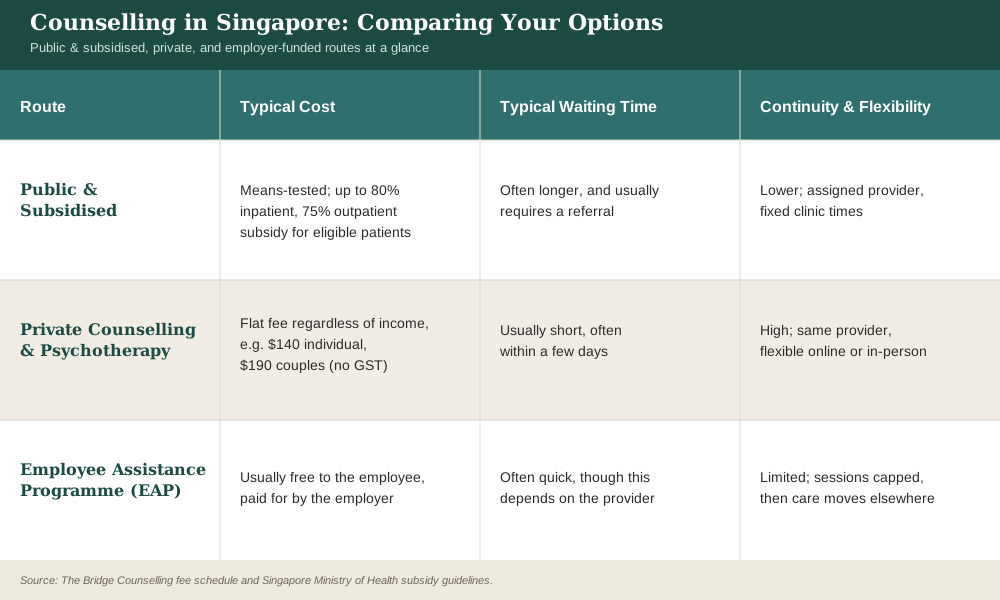
The right choice between public, subsidised, and private routes depends on urgency, budget, and how much continuity and flexibility matter to the person seeking help. None of these routes is inherently superior to another; they simply serve different needs and different stages of the same overall goal, which is getting appropriate support in place.
Frequently Asked Questions
Do I need a referral to see a counsellor in Singapore?
No referral is required to book a private counselling session directly. A referral is generally required only to access subsidised rates at a polyclinic or through certain public schemes.
What is the difference between a counsellor and a psychologist?
Counsellors typically focus on talk therapy for emotional and relational concerns and usually hold a Master's-level qualification in counselling. Psychologists are trained to assess and diagnose a wider range of psychological conditions, often using formal testing, and usually hold postgraduate qualifications in psychology specifically. Neither can prescribe medication; that is the domain of a psychiatrist.
Can I claim mental health counselling on insurance in Singapore?
This depends entirely on the specific policy. It is best to check directly with the insurer regarding coverage for counselling, and to request an official invoice from the provider to support a reimbursement claim.
Is online counselling as effective as in-person sessions?
For many concerns, yes. A meta-analysis of randomised clinical trials comparing teletherapy with in-person therapy found that client outcomes did not differ meaningfully between the two formats, lending empirical support to the use of remote sessions alongside in-person care (Lin et al., 2022). Online counselling delivered via secure video call provides the same level of preparation, expertise, and therapeutic focus as in-person work, and the right format generally comes down to personal comfort and circumstances rather than effectiveness alone.
How long does counselling usually take to help?
There is no fixed timeline. Some concerns resolve in a handful of sessions, while others, particularly trauma-related or long-standing patterns, take longer. Your counsellor will typically review progress with you at regular points along the way rather than working towards a fixed number of sessions.
What should I do if I am in crisis right now?
If there is any risk of harm to yourself or someone else, contact emergency services or a crisis line immediately rather than waiting for a scheduled session. A list of helplines and immediate resources is available on our emergency resources page.
If a question has not been answered here, our full frequently asked questions page covers session logistics, confidentiality, and practical details in more depth, and our contact page is the quickest way to reach us directly. When you are ready, you can book a session or take a look at our counselling space on Orchard Road before your first visit.
Taking the First Step
None of this needs to be worked out alone. Whether you are weighing up a counsellor against a psychologist, wondering whether what you are feeling counts as serious enough, or simply trying to understand what a session looks like before you commit to one, the path forward usually becomes clearer once you start asking the questions rather than carrying them in silence. Singapore offers a genuine range of routes into support, from subsidised polyclinic care through to private counselling with someone you choose deliberately, and there is no single correct entry point, only the one that fits where you are right now.
If that next step is a conversation with us, you can book a session, take a look at our counselling space on Orchard Road, or get in touch with any questions before deciding. Your first step does not have to be perfect. It simply has to begin.
References
Doll, C. M., Michel, C., Rosen, M., Osman, N., Schimmelmann, B. G., & Schultze-Lutter, F. (2021). Predictors of help-seeking behaviour in people with mental health problems: A 3-year prospective community study. BMC Psychiatry, 21, 432.
Flückiger, C., Del Re, A. C., Wampold, B. E., & Horvath, A. O. (2018). The alliance in adult psychotherapy: A meta-analytic synthesis. Psychotherapy, 55(4), 316–340.
Holmes, S. C., Johnson, C. M., Suvak, M. K., Sijercic, I., Monson, C. M., & Wiltsey Stirman, S. (2019). Examining patterns of dose response for clients who do and do not complete cognitive processing therapy. Journal of Anxiety Disorders, 68, 102120.
Lavik, K. O., Frøysa, H., Brattebø, K. F., McLeod, J., & Moltu, C. (2018). The first sessions of psychotherapy: A qualitative meta-analysis of alliance formation processes. Journal of Psychotherapy Integration, 28(3), 348–366.
Lin, T., Heckman, T. G., & Anderson, T. (2022). The efficacy of synchronous teletherapy versus in-person therapy: A meta-analysis of randomized clinical trials. Clinical Psychology: Science and Practice, 29(2), 167–178.
Ministry of Health, Singapore. (n.d.-a). Primary mental healthcare services. Ministry of Health.
Ministry of Health, Singapore. (n.d.-b). Affordability of mental health treatments. Ministry of Health.
Ministry of Health, Singapore. (n.d.-c). Subsidies for specialist outpatient care at public healthcare institutions. Ministry of Health.
Ong, W. J., Goh, C. M. J., Tan, G. T. H., Shahwan, S., & Subramaniam, M. (2024). A qualitative enquiry on the impact of mental illness stigma on caregiving role and experiences in Singapore. Frontiers in Psychiatry, 15, Article 1417514.
Robinson, L., Kellett, S., & Delgadillo, J. (2020). Dose-response patterns in low and high intensity cognitive behavioral therapy for common mental health problems. Depression and Anxiety, 37(3), 285 to 294.
Samari, E., Teh, W. L., Roystonn, K., Devi, F., Cetty, L., Shahwan, S., & Subramaniam, M. (2022). Perceived mental illness stigma among family and friends of young people with depression and its role in help-seeking: A qualitative inquiry. BMC Psychiatry, 22, Article 107.
Shafie, S., Subramaniam, M., Abdin, E., Vaingankar, J. A., Sambasivam, R., Zhang, Y., Shahwan, S., Chang, S., Jeyagurunathan, A., & Chong, S. A. (2021). Help-seeking patterns among the general population in Singapore: Results from the Singapore Mental Health Study 2016. Administration and Policy in Mental Health and Mental Health Services Research, 48(4), 586–596.
Subramaniam, M., Abdin, E., Vaingankar, J. A., Shafie, S., Chua, B. Y., Sambasivam, R., Zhang, Y., Shahwan, S., Chang, S., Jeyagurunathan, A., Tan, K. B., Verma, S., Heng, D., & Chong, S. A. (2020). Tracking the mental health of a nation: Prevalence and correlates of mental disorders in the second Singapore Mental Health Study. Epidemiology and Psychiatric Sciences, 29, e29.
Tan, G. T. H., Shahwan, S., Goh, C. M. J., Ong, W. J., Wei, K. C., Verma, S. K., et al. (2020). Mental illness stigma's reasons and determinants (MISReaD) among Singapore's lay public: A qualitative inquiry. BMC Psychiatry, 20, 1–13.
This article is provided for informational purposes only and does not establish a client-therapist relationship. If you are experiencing a mental health crisis, please seek immediate help through the resources listed above.

About the Author
Sharon Dhillon
Sharon is an experienced counsellor and psychotherapist in Singapore, providing affordable mental health support to individuals and couples.


